Regulatory Updates
EU BPA Restrictions: What the 20 July 2026 Deadline Means for Food-Contact Materials
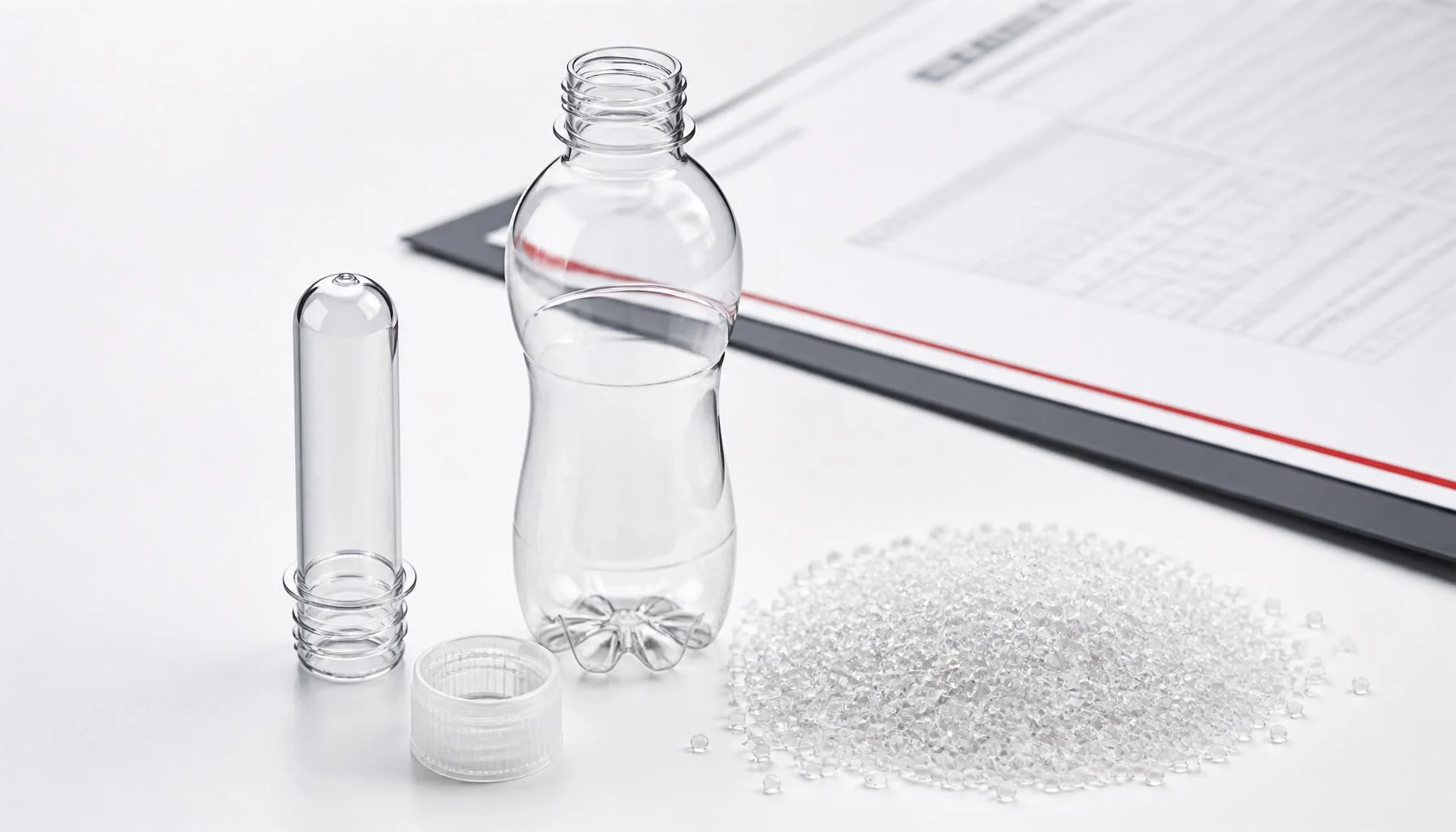 AI-generated image
The main EU transitional period for food-contact materials manufactured using BPA ends on 20 July 2026. Find out what the deadline means for manufacturers, processors and material supply chains.
20 July 2026 is an important regulatory deadline for companies manufacturing, processing or supplying materials intended to come into contact with food.
However, it is important to describe the change accurately.
The EU restrictions on bisphenol A, commonly known as BPA, did not enter into force on 20 July 2026. Commission Regulation (EU) 2024/3190 entered into force on 20 January 2025.
20 July 2026 marks the end of the main 18-month transitional period. Until that date, most single-use and repeat-use final food-contact articles manufactured using BPA in accordance with the previous rules may still be first placed on the EU market.
After the applicable transitional period ends, materials and articles within the scope of the Regulation must comply with the new requirements, unless a specific derogation or extended transition applies.
Why Has the EU Restricted BPA?
BPA has been used as a monomer or starting substance in the manufacture of certain plastics and epoxy resins. These materials can be found in products such as food containers, beverage bottles, coatings for metal packaging, lids, tanks and other food-processing equipment.
BPA may migrate from a food-contact material into food, resulting in consumer exposure.
In 2023, the European Food Safety Authority reassessed the risks associated with BPA in food. EFSA established a tolerable daily intake of 0.2 nanograms per kilogram of body weight per day. This was 20,000 times lower than the temporary level established in 2015.
EFSA concluded that dietary exposure to BPA represented a health concern for consumers across all age groups. The immune system was identified as the most sensitive health outcome considered in the assessment.
The European Commission subsequently adopted Regulation (EU) 2024/3190, based on EFSA's scientific assessment.
What Does Regulation (EU) 2024/3190 Prohibit?
The Regulation prohibits:
- the use of BPA in the manufacture of food-contact materials and articles covered by the Regulation;
- the placing on the EU market of food-contact materials and articles manufactured using BPA.
The general prohibition is subject to limited derogations for specific applications listed in Annex II of the Regulation.
The rules cover the following groups of food-contact materials:
- adhesives,
- rubbers,
- ion-exchange resins,
- plastics,
- printing inks,
- silicones,
- varnishes and coatings.
The scope is therefore wider than plastic packaging alone. It can also cover intermediate materials and components used to manufacture a finished food-contact article.
The European Commission's official guidance specifically identifies plastic pellets intended to be converted into bottles as an example of an intermediate food-contact material.
Paper and board are not directly included in the list of covered materials. However, a paper or board article may still be affected where it incorporates a covered component, such as a plastic layer, adhesive, printing ink or coating.
What Exactly Changes on 20 July 2026?
For most single-use final food-contact articles manufactured using BPA and compliant with the rules that applied before 20 January 2025, 20 July 2026 is the final date on which they may be first placed on the EU market.
The same general first-placement deadline applies to most repeat-use final food-contact articles.
"First placing on the market" is important. It refers to the first time a material or article is made available on the EU market. It should not automatically be understood as the final retail sale to a consumer.
The transitional provisions can be summarised as follows:
| Category | Main deadline |
|---|---|
| Most single-use final food-contact articles manufactured using BPA | First placement on the market until 20 July 2026 |
| Most repeat-use final food-contact articles manufactured using BPA | First placement on the market until 20 July 2026 |
| Certain single-use articles for preserving specified fruit, vegetables and fishery products | Extended transition until 20 January 2028 |
| Single-use articles with a BPA-based varnish or coating applied only to the exterior metal surface | Extended transition until 20 January 2028 |
| Repeat-use articles used as professional food-production equipment | Extended transition until 20 January 2028 |
The wording of the transitional provisions was clarified and corrected by Commission Regulation (EU) 2026/250, which has applied since 23 February 2026.
20 January 2025
Regulation (EU) 2024/3190 entered into force
20 July 2026
Main transitional period ends
20 July 2027
General deadline for relevant repeat-use articles to remain on the market
20 January 2028
Extended transition ends for specified applications
20 January 2029
Extended market period ends for relevant repeat-use professional equipment
20 January 2025
Regulation (EU) 2024/3190 entered into force
20 July 2026
Main transitional period ends
20 July 2027
General deadline for relevant repeat-use articles to remain on the market
20 January 2028
Extended transition ends for specified applications
20 January 2029
Extended market period ends for relevant repeat-use professional equipment
What Happens to Products Already on the Market?
Single-use final food-contact articles first placed on the market before the applicable deadline may be filled with food and sealed during the following 12 months.
The resulting packaged food may subsequently remain on the market until stocks are exhausted.
Most repeat-use final food-contact articles first placed on the market under the general transitional provision may remain on the market until 20 July 2027.
Repeat-use articles covered by the extended transition for professional food-production equipment may remain on the market until 20 January 2029.
Different rules apply to intermediate food-contact materials. The Commission's guidance explains that there is no equivalent provision allowing the continued placing on the market or exhaustion of stocks of intermediate materials after the relevant transition. This makes the status and timing of materials such as plastic pellets particularly important.
"BPA-Free" Is Not a Complete Regulatory Description
The expression "BPA-free" is widely used in commercial communication, but it does not fully describe the legal requirements.
Regulation (EU) 2024/3190 focuses primarily on whether BPA was used in the manufacturing process and whether a material or article manufactured using BPA is placed on the EU market.
The Commission's guidance also explains that recycled food-contact materials may contain minute, unintended amounts of BPA originating from recycled input. Where BPA has not been intentionally used and the contamination cannot be fully controlled, those recycled materials are not covered by the Regulation's general prohibition on BPA use.
At the same time, food-contact materials manufactured using another bisphenol or bisphenol derivative must not contain residual BPA. The Regulation also restricts other bisphenols and bisphenol derivatives that have specified harmonised hazardous classifications.
Replacing BPA with another bisphenol should therefore not be assumed to ensure compliance automatically.
Documentation Is Essential
Compliance cannot be established solely by the commercial name of a polymer or by a general statement about a material family.
Food-contact materials covered by the Regulation must be supported by an appropriate Declaration of Compliance. Supporting documentation must also be available and supplied to the competent authorities upon request.
According to the Regulation and the Commission's guidance, documentation should allow the relevant intermediate material or final article to be identified and should provide the information required by Annex III.
For manufacturers and processors, this means verifying:
- the exact material grade,
- whether BPA or another relevant bisphenol was used in manufacturing,
- the intended food-contact application,
- any applicable restrictions or derogations,
- the status of additives, colorants and other components,
- the Declaration of Compliance and supporting documentation,
- the date on which existing material or articles were first placed on the market.
A generic statement that a polymer is "food safe" or "BPA-free" should not replace grade-specific documentation and an assessment of the final application.
- 0101
Intermediate material
Plastic pellets and other materials intended for further processing
- 0202
Processor
Conversion and manufacturing conditions
- 0303
Final food-contact article
Complete composition and intended use
- 0404
Documentation
Declaration of Compliance and supporting information
What Does This Mean for Plastics Processors?
The new requirements make early material verification increasingly important.
Processors producing food-contact components should first determine whether their material is covered by Regulation (EU) 2024/3190. They should then check the precise grade, supplier documentation, manufacturing date, supply-chain status and intended use.
This is particularly relevant where BPA has historically been used as a starting substance, including in certain polycarbonate and epoxy-based systems.
It is equally important not to overgeneralise. The Regulation concerns food-contact applications. It does not prohibit polycarbonate or other engineering thermoplastics in applications that are outside its scope.
Compliance must be assessed for the exact material, finished article and foreseeable conditions of use.
How Danje-Polymer Supports Material Selection
At Danje-Polymer, we support customers in selecting engineering thermoplastics for specific technical and application requirements.
For projects involving regulated applications, material selection should include not only mechanical strength, temperature resistance, chemical resistance and processing performance, but also:
- the intended application,
- regulatory requirements,
- the exact material grade,
- available producer documentation,
- additives and color variants,
- processing conditions,
- testing of the finished component.
We work with customers and material producers to help identify suitable solutions and obtain the available grade-specific documentation.
However, the compliance of a finished food-contact article must always be evaluated for its complete composition, manufacturing process and intended conditions of use. No polymer family, brand or general material description should be treated as universally approved for every food-contact application.
Sources
All substantive legal and scientific information in this article was checked against the following official sources:
- Consolidated Commission Regulation (EU) 2024/3190, version applicable from 23 February 2026
- Commission Regulation (EU) 2026/250 correcting Regulation (EU) 2024/3190
- European Commission guidance on implementing Regulation (EU) 2024/3190
- European Commission announcement concerning the BPA restriction
- EFSA: Re-evaluation of the risks associated with BPA in food
Planning a Food-Contact Application?
Contact the Danje-Polymer team to discuss the technical requirements of your application and the availability of appropriate material documentation.
Frequently asked questions
FAQ
Did the EU BPA ban enter into force on 20 July 2026?
No. Regulation (EU) 2024/3190 entered into force on 20 January 2025. The date 20 July 2026 marks the end of the main transitional period for the first placing on the market of most affected food-contact materials and articles manufactured using BPA under the previous rules.
Does the Regulation apply only to plastic packaging?
No. It covers specified food-contact materials including plastics, adhesives, rubbers, ion-exchange resins, printing inks, silicones, varnishes and coatings.
Are all polycarbonate materials prohibited?
No. The Regulation applies to food-contact materials and articles manufactured using BPA. It does not prohibit polycarbonate in applications outside food contact. Every food-contact application must be assessed using the exact material grade and its documentation.
Is a “BPA-free” statement sufficient?
Not necessarily. Compliance should be supported by a Declaration of Compliance and appropriate documentation for the exact material or article. The Regulation also includes requirements concerning other hazardous bisphenols and residual BPA.
Does the Regulation apply to plastic granules?
Plastic pellets intended to be converted into food-contact articles can qualify as intermediate food-contact materials. Their regulatory and documentation status should therefore be verified throughout the supply chain.